
Country Balls: World Battle
MAD PIXEL GAMES LTDStrategy
4.71.11K Reviews
- Version
- 1.7.5
- Installs
- 1.00M
- Age Rating
- Everyone
Screenshots

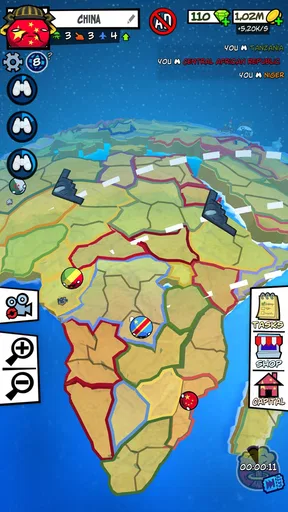
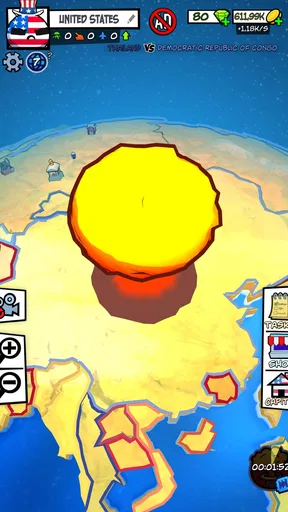
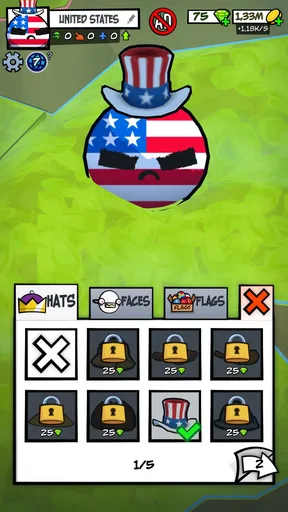
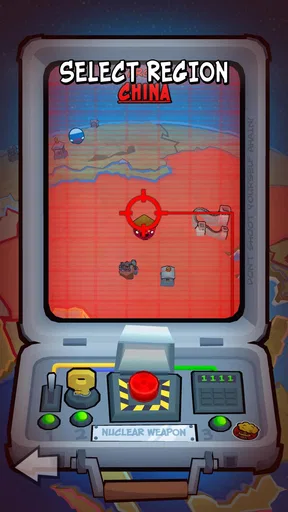
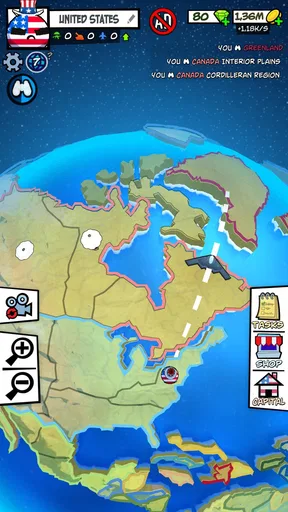
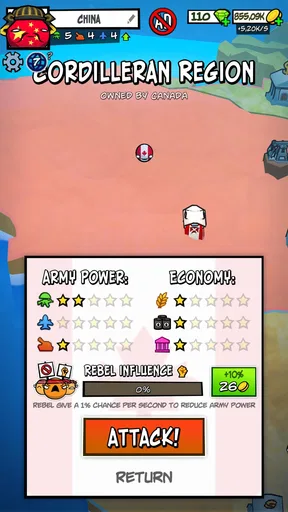
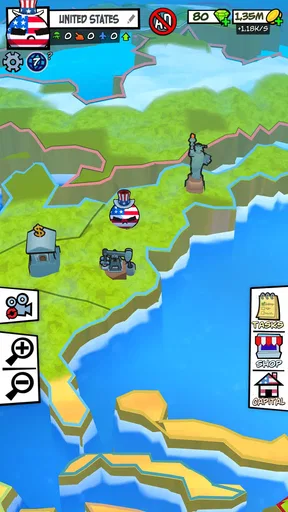
Our Review of Country Balls: World Battle
 Analysis by Appyee
I went into Country Balls: World Battle expecting a light strategy game built around the familiar country-ball style, but I found that its appeal depends less on visual novelty than on how quickly it lets me make decisions. The basic idea is straightforward: command forces, choose tactics, and try to outthink the opposition. That makes it easy to understand in a short session, while still leaving room for players who enjoy weighing risks instead of tapping through battles without a plan.
It is a free strategy game from MAD PIXEL GAMES LTD, rated Everyone, and it has already passed one million installs with a 4.7 average from around 49 thousand ratings. Those figures suggest that the presentation has reached a broad audience, but they do not automatically make it suitable for everyone. My experience is that the game works best for people who want compact strategic decisions with a humorous visual identity, rather than a deep simulation or a long-form competitive strategy experience.
How the game feels in ordinary play
The first thing I noticed was the low barrier to entry. The country-ball theme gives the game an immediately recognizable personality, and the central objective is clear enough that I could begin making meaningful choices quickly. I did not need to approach it like a complicated grand-strategy title with a large rulebook. That accessibility is one of its strongest qualities, especially when I only have a few minutes and want something more thoughtful than a purely reflex-based game.
At the same time, the simple presentation should not be mistaken for a completely shallow experience. The useful decisions come from deciding when to commit resources, when to hold back, and whether an aggressive move is worth the risk. A player who treats every encounter as a race to attack can easily lose the advantage. I got better results when I paused to consider what my current position allowed rather than reacting to the most obvious target.
That makes it a good fit for short breaks during a commute, a waiting-room visit, or an evening when I want several small sessions instead of one uninterrupted campaign. I could put it down without feeling that I had abandoned a long, delicate chain of actions. However, anyone looking for a story-heavy strategy game, a detailed historical model, or a highly elaborate management layer may find the experience too light.
Speed expectations and the value of short sessions
In practical terms, the game feels designed around getting into a decision quickly. The visual style is not burdened by realism, and the country-ball concept keeps the interface and battlefield atmosphere playful rather than intimidating. That helps the opening moments feel brisk. I could focus on the immediate tactical question instead of spending the first part of a session learning an enormous collection of menus.
The perceived speed is also helped by the fact that the game asks me to think in manageable steps. I am not constantly tracking every possible variable at once. Instead, I can usually identify the current pressure point, decide how much to commit, and then reassess. This rhythm is more comfortable on a phone than a strategy game that expects me to inspect a large map for several minutes before making one move.
There is a trade-off here. Faster access to decisions can make repeated encounters feel familiar sooner than they would in a much deeper strategy game. If I want a system where every session introduces a radically different political or economic puzzle, this is probably not the right choice. Its strength is the balance between recognizable rules and enough tactical uncertainty to keep a short session interesting.
A useful habit is to avoid spending every available option immediately. Holding something in reserve gives me room to respond when the situation changes, and it also prevents the game from becoming a sequence of automatic attacks. This is one of the less obvious lessons I took from playing: the best move is often the one that preserves a future choice, not the one that creates the biggest effect right now.
What happens when the action becomes heavier
The moments that demand the most attention are not necessarily the visually busiest ones. The real pressure comes when several decisions compete for the same limited opportunity. I found that a careless early commitment could make the rest of an encounter feel harder than it needed to be. Once I began separating essential moves from tempting ones, the battles felt more controlled.
This also affects how the game performs as a mobile experience. During ordinary play, the compact art direction gives the impression of a relatively modest workload compared with visually intensive action games. I would still keep expectations realistic: a phone with limited free storage, an older processor, or many other apps active in the background may not offer the same smooth experience as a newer device. The minimum operating-system requirement is Android 7.1, so compatibility reaches back to older Android hardware, but operating-system support alone does not guarantee identical responsiveness on every phone.
For heavy use, I would close unnecessary background apps before a longer session, particularly on an older handset. That is not a special requirement unique to this title; it is simply a sensible way to reduce interruptions when a game is handling repeated interactions. I also prefer lowering my expectations about long, uninterrupted sessions on budget devices. The game is easier to enjoy when I treat it as a series of focused encounters rather than an all-day activity.
Another practical point is battery awareness. The playful graphics do not make it reasonable to assume that every device will use the same amount of power. Screen brightness, network conditions, background activity, and the age of the battery all matter. I would start a longer session with a reasonable charge and avoid judging the game’s efficiency from one phone alone. The important distinction is that the game feels lightweight in presentation, but the actual experience still depends on the device running it.
Reliability, interruptions, and recovering from a bad moment
For me, reliability is less about never seeing a pause and more about whether the game remains understandable when something interrupts the session. Short-session design helps here. If I am called away after making a decision, I do not feel as though I have lost an hour of carefully arranged progress. That makes it more forgiving than a strategy game whose enjoyment depends on maintaining a long uninterrupted chain of planning.
Still, I would not assume that every interruption is harmless. Mobile games can be affected by low memory, unstable connectivity, operating-system activity, or a phone switching aggressively between applications. The sensible approach is to finish a current decision before leaving the game when possible, especially during a more important encounter. I also prefer reopening it normally rather than repeatedly forcing it into the background and expecting the exact same state to remain available.
The game’s free entry is helpful for testing reliability on a personal device. I can try it without paying first and see whether it behaves comfortably on my phone. That matters because performance impressions vary widely between devices. A game that feels perfectly responsive on a recent handset may feel less comfortable on an older one, even when both meet the stated operating-system requirement.
Recovery after a tactical mistake is another kind of reliability. I found the game more enjoyable when I treated a poor move as information rather than immediately trying to compensate with increasingly aggressive choices. If an encounter goes badly, I would first identify whether I committed too early, ignored a defensive option, or spent a resource for a short-term gain. That mindset makes retries more useful and reduces the temptation to blame every loss on randomness.
Device limits and the cost of convenience
Because the game is free, the main decision is not whether the purchase price is acceptable but whether its style matches the way I use my phone. The listed in-app purchases range from $0.99 to $20.99 per item. I would approach those purchases carefully. They may offer convenience or accelerate progress, but the better test is whether the core tactical loop remains enjoyable without spending. If I feel pressured to buy simply to make ordinary play tolerable, that is a warning sign for me.
There is also a difference between playing casually and playing heavily. A casual player can probably appreciate the quick decisions and humorous theme without needing to optimize every move. A more committed player may start examining which actions provide the best long-term value and may become more aware of any friction around progression or repeated encounters. That is not necessarily a flaw, but it changes the tone from relaxed amusement to resource management.
I would skip this game if I wanted a calm puzzle experience with no conflict, because its identity is built around commanding forces and winning confrontations. I would also look elsewhere if I wanted a large-scale strategy sandbox with detailed diplomacy, extensive construction systems, or a realistic military presentation. The country-ball style is deliberately playful, and that visual choice will either make the game inviting or make it feel too cartoonish, depending on what I want from strategy games.
On the other hand, it is a strong candidate for someone who finds traditional strategy interfaces intimidating. The theme softens the presentation, and the free price makes experimentation easy. It can also work for players who usually play arcade games but want a little more planning without committing to a complicated management title. The Everyone age rating reinforces that broad accessibility, although younger players should still use sensible purchasing controls because optional items cost money.
Three habits that improve the experience
My first recommendation is to plan around the next decision rather than only the current victory. A move that wins immediately may leave the following situation weaker, while a restrained action can preserve flexibility. This is particularly useful when I am tempted to use every available advantage at once. Saving one option for a response often makes the encounter feel less dependent on luck.
Second, I would use the opening phase to learn the opponent’s pattern before committing heavily. Even when the game looks lighthearted, the early moments can reveal whether an aggressive approach is likely to succeed. I get more value from watching the situation develop than from assuming that the strongest-looking action is automatically the correct one.
Third, I would separate device testing from gameplay judgement. If the game stutters after I have many applications open, I would repeat the test after restarting the phone before deciding that the title is inherently demanding. Conversely, if it feels smooth for a few minutes but becomes uncomfortable during a long session, I would treat that as a real use-case limitation rather than dismissing it because the opening was fine. This distinction is useful for anyone deciding whether the game belongs on an older daily-use phone.
How it compares with other strategy choices
Compared with a traditional turn-based strategy game, this title is easier to approach and less interested in presenting a detailed world model. I spend less time studying layers of information and more time responding to the immediate conflict. That makes it better for quick play, but it also means that players who enjoy elaborate planning across many systems may eventually want something deeper.
Compared with real-time strategy games, it feels less demanding on reflexes. The challenge is not primarily about selecting units at extreme speed or managing a large battlefield simultaneously. That makes it more comfortable on a touchscreen, where precision and screen space can become problems. The compromise is that it may not deliver the same sense of scale or intensity as a full real-time battlefield.
Compared with casual puzzle games, it offers more room for deliberate choices but carries more pressure from winning and losing conflicts. I would recommend it to someone who wants a strategy flavor without the dense commitment of a major mobile war game. I would not recommend replacing a favorite puzzle game with it if the main goal is relaxation without competitive tension.
Who should install it and who should pass
The game is at its best for players who enjoy humorous presentation, compact tactical decisions, and the freedom to play in short bursts. It is also a sensible trial for anyone curious about strategy but unwilling to begin with a complex title. The fact that it is free lowers the risk of finding out whether the country-ball theme and battle rhythm suit your taste.
I would pass if I needed a story that carries the entire experience, a realistic simulation, or a guaranteed high-end visual showcase. I would also be cautious if my phone is old, frequently short on memory, or used with many demanding apps open at once. The Android 7.1 requirement makes the compatibility range broad, but actual comfort still depends on the hardware and the way the device handles background activity.
The current version is 1.7.5, and that gives me a clear reference point when checking whether my installed copy is current. I would keep the game updated through the normal app store process, particularly if I experienced unusual instability, because version changes can affect how a title behaves on different phones. I would also decide in advance whether I am comfortable with optional spending rather than making that choice in the middle of a frustrating encounter.
My performance verdict
After spending time with it, I see Country Balls: World Battle as a deliberately accessible strategy game rather than a replacement for a full-scale war simulator. Its strongest performance quality is perceived responsiveness: the visual design and compact decision loop make it feel suitable for quick mobile sessions. Its main limitation is that players seeking extensive strategic depth may outgrow the lighter structure, while older devices may still vary in smoothness despite meeting the operating-system requirement.
I like it most when I use it as a focused break: open the game, assess the conflict, make a measured decision, and stop before the session turns into automatic repetition. The best experience comes from treating each move as a trade-off, not from rushing toward the most dramatic action. That approach also makes the game more satisfying for players who want to improve rather than simply pass time.
My final recommendation is positive, with clear boundaries. If you want a free, approachable strategy game with a distinctive country-ball identity and enough tactical thinking to make short sessions worthwhile, I think it is worth trying. If you want a deep campaign, a realistic battlefield, or consistently demanding performance on an older phone, another strategy game will probably serve you better. For the right player, though, Country Balls: World Battle succeeds because it keeps the strategic question understandable: choose your moment, protect your options, and do not confuse a funny presentation with a reason to stop thinking.
Verdict
Strengths of Country Balls: World Battle
- Simple controls make battles easy to learn for casual players.
- Colorful country-ball designs give the game a distinctive visual style.
- Short matches fit well into quick gaming sessions.
- Unlockable content provides goals beyond the opening levels.
- Lighthearted humor makes the theme approachable for younger players.
Limitations of Country Balls: World Battle
- Some stages may feel repetitive after extended play.
- Progress can become slower without optional purchases or rewards.
- The humorous stereotypes may not appeal to every player.
- Difficulty balance may vary between missions and opponents.
- Ads can interrupt gameplay, depending on the version and device.
Other Releases by MAD PIXEL GAMES LTD
View All
Country Balls: World War
Strategy4.6
Similar Picks in This Category
View All
Clash of Clans
Supercell4.5

Plants vs. Zombies™
ELECTRONIC ARTS3.7

Lords Mobile: Kingdom Wars
IGG.COM4.5

Clash Royale
Supercell4.4

State.io — Conquer the World
CASUAL AZUR GAMES4.1

Car Driving School : Car Games
Spark Game Studios3.9
Frequently Asked Questions
What is Country Balls: World Battle?
Country Balls: World Battle is a casual strategy game built around humorous country-ball characters and global battles. Players generally collect or control national-themed units, improve their strength, and compete across different stages or encounters. Its cartoon presentation makes the subject feel lighthearted rather than realistic, while the gameplay focuses on quick decisions, upgrading characters, and progressing through increasingly challenging opponents.
Is Country Balls: World Battle free to download and play?
The game can typically be downloaded for free on supported Android or iOS devices, allowing players to try its main gameplay without an upfront purchase. However, free-to-play games commonly include optional in-app purchases for currency, upgrades, special items, or faster progress. Availability of advertisements, purchase prices, and specific features may vary by platform, region, and version, so checking the store listing is recommended.
Does Country Balls: World Battle require an internet connection?
An internet connection may be needed for certain parts of Country Balls: World Battle, including advertisements, online events, account synchronization, updates, or competitive features. Some basic gameplay may work offline, but this should not be assumed for every mode. If you plan to play while traveling or without mobile data, test the game after installation and review its current store description.
Is Country Balls: World Battle suitable for children?
Country Balls: World Battle uses colorful cartoon characters and exaggerated battle scenarios, so it is generally presented in a playful, non-realistic style. Nevertheless, parents should review the age rating, advertising, chat or social functions, and in-app purchase settings before allowing younger children to play. Because country-related humor and competitive mechanics may vary in tone, parental supervision is advisable for younger users.
What devices are compatible with Country Balls: World Battle?
Compatibility depends on the version released for Android or iOS and the operating system requirements listed in the relevant app store. A relatively recent phone or tablet should provide a smoother experience, especially during battles or menus with many animated elements. Before downloading, verify the required operating-system version, available storage, and developer information to avoid installation or performance problems on older devices.
Play our best games!


